Young Sounds UK is a national charity that, over the past 25 years, has supported talented young people from low-income families, helping them to overcome financial and social barriers.
Young Sounds UK is an Arts Council England-funded National Portfolio Organisation (NPO).
We are very fortunate and thankful to have the opportunity to hear from Judith and the Young Sounds UK team, to listen to their experiences, and to share their learnings with you.
The following text is Young Sounds UK’s own words, responding to our prompts.
Tell us a little about Young Sounds UK and the case study
Musical talent is everywhere, but opportunity isn’t. Family finances and other obstacles too often get in the way. Young Sounds exists to change that through:
- Supporting young musicians from low-income families with funding and other help
- Supporting music education through training, advocacy and research.
In this case study, we talk about evaluation in the context of the Connect programme, which helps young musicians from the earliest stages in their musical journey. The programme enables those from low-income families to sustain their musical learning after initial state-funded whole-class lessons end, so they can keep progressing and playing music well into their teens and beyond. Young Sounds works in partnership with 23 regions in England to identify and support up to 1,000 children and young people each year.
Evaluation has always been an important part of this programme, and one element of this process is to ask all the students and their teachers to complete termly surveys that track views, achievements, and areas for improvements.
How has Young Sounds UK participated in the Impact & Insight Toolkit project so far?
Young Sounds has participated in the Toolkit project since it became an NPO in April 2023, which coincided with when I started working with them as their External Evaluator. Before that, each programme had been using its own data collection platforms, so there was survey data saved in lots of different places.
Since that time, we’ve been developing ways of collecting data to support evaluation and learning for each of Young Sounds’ programmes, as well as for reporting back to our major funders.
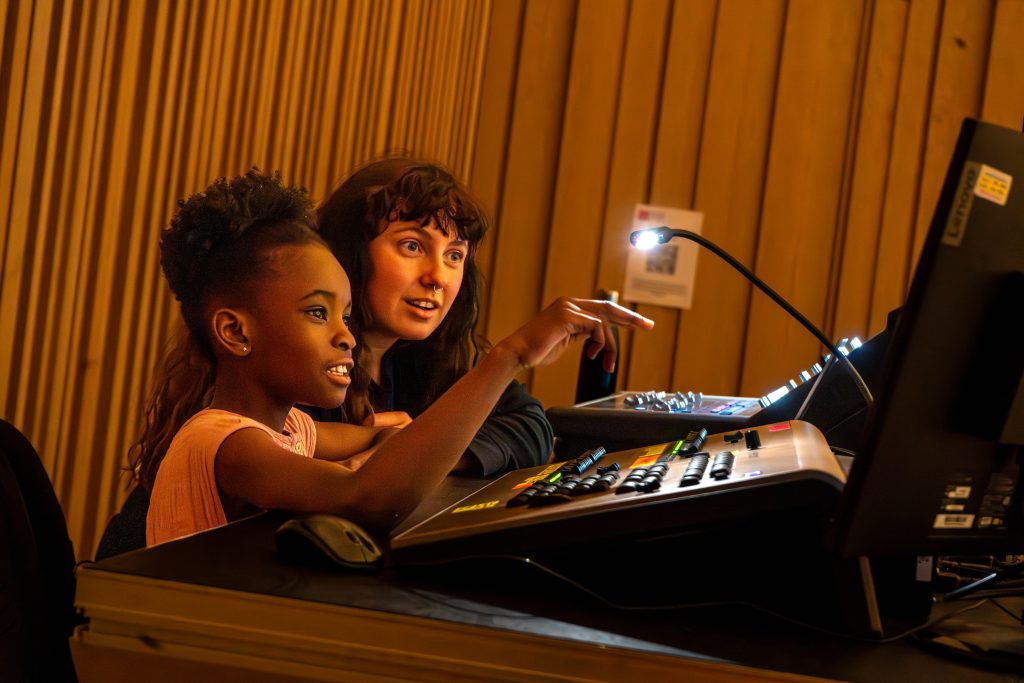 Credit – Matthew Tiller
What have been the biggest benefits of participating in the Impact & Insight Toolkit for Young Sounds UK?
There have been several benefits of participating in the Toolkit, both practical and in terms of longer-term evaluation outcomes.
When we first started using Culture Counts (transitioning away from another, well-known survey platform) teachers and students commented on how nice the user interface in Culture Counts was. Younger children especially enjoyed the “swipe” function of certain question types, including the Dimensions. We have also increasingly appreciated the function that allows us to present the surveys in both online and offline interviewer mode, which is a great help to music teachers working in schools where they can’t access the WiFi and there’s no phone signal!
Thanks to the platform being relatively simple for account holders to use, colleagues have been involved in checking responses and setting up their own surveys. This helps to share the responsibility of evaluation across the organisation.
When designing the termly surveys, we have been setting up individual surveys for each region involved in the Connect programme within one single evaluation. This means that we can track local response rates and share data with our regional partners, whilst also comparing replies and generating a national overview for the questions we are asking. I’ve particularly enjoyed the way in which charts can be generated, which make for easy and visually simple reporting.
Over the last 3 years, I’ve worked hard to not only set up the surveys and analyse the results, but to also share them internally and with our partners. For example, as I’ve visited the Teachers’ Forums that are hosted in each of the regions (where the instrumental teachers involved in Connect can meet to discuss the programme and good practice) I’ve presented findings specific to their region. This has contributed to an increased understanding of what is working well for local students and learnings for teachers and Connectors. The sharing of findings, as well as the improved user interface that Culture Counts offers, has also helped to increase response rates, as colleagues understand the purpose of the surveys and see the outcomes. This then means we can be more confident about the accuracy of our findings.
What have been the biggest challenges of participating in the Impact & Insight Toolkit for Young Sounds UK? How have you overcome these challenges?
We do encounter the universal struggle of getting a good response rate from the teachers and students in the Connect programme. Music teachers are incredibly busy people, so making the surveys in Culture Counts as short and friendly as possible is always at the forefront of our minds, whilst ensuring we get the information we need.
The students we work with come from low-income families who face additional barriers such as a lack of parental engagement, digital poverty, and English as an additional language. We have a range of strategies to help students complete their surveys, led by our incredible network of regional Connectors. These include:
- Asking their instrumental teachers to help students complete surveys (which is where the interviewer mode is useful)
- Asking regional mentors to help
- Asking students to complete surveys during events and activities.
In terms of analysis of the data we collect, we’re keen to track replies across multiple years. For example, we’ve been asking the same set of Dimensions questions, available via the Toolkit, of the teachers and students since we started participating in the Toolkit in 2023. We were frustrated by not being able to easily compare replies across evaluations without spending time compiling and re-presenting data. However, thanks to a conversation with Alys from Counting What Counts, we now know we can use the Reporting Dashboard to compare Dimensions scores from across evaluations, and we’re excited to see what this shows us.
We would love for there to be a function to compare other, bespoke question data across surveys, to track multi-survey responses in future. For example, one of our Arts Council England KPIs is the proportion of teachers using a student-centred approach to instrumental teaching. It would be great to be able to chart these answers over several years to see what the impact of our Teachers’ Forums are on teachers’ practice. This request has been put forward to Counting What Counts and Culture Counts for consideration.
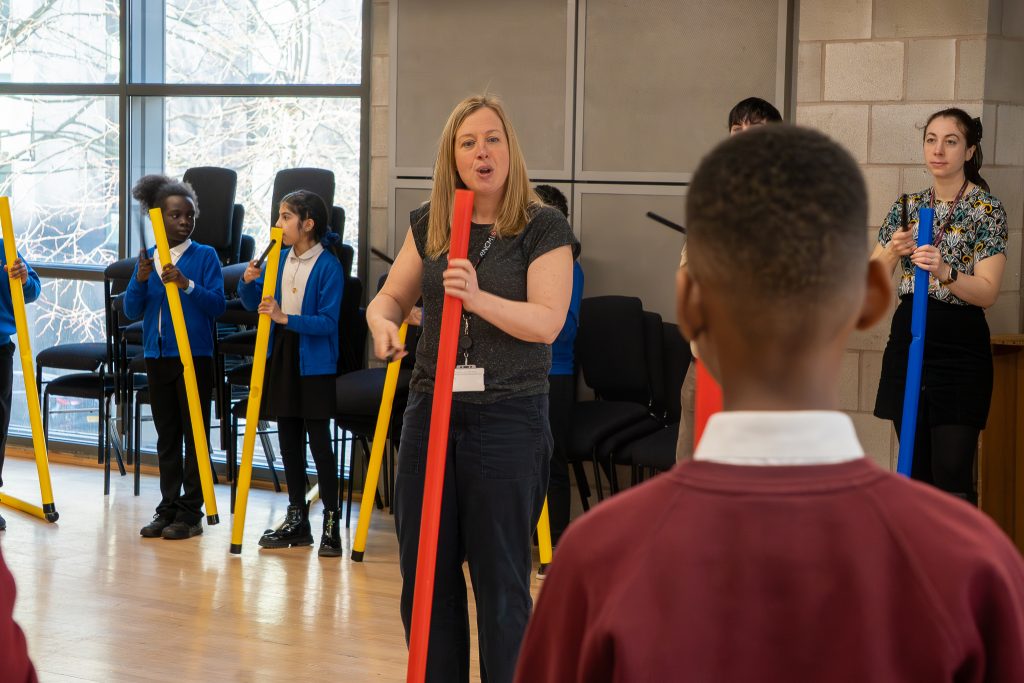 Credit – Matthew Tiller
Has the data gathered through Culture Counts been used to inform and develop Young Sounds UK’s programmes? If so, how?
The data collected through the Connect termly surveys has been used in lots of different ways. The following two examples show how it has been used at both a localised and a strategic level within Young Sounds.
- By collecting feedback from the children in receipt of instrumental lessons within the local partnerships and feeding it back to the Connectors, it’s possible for there to be a greater insight into what individual children are enjoying the most, what makes the biggest impact on their musical learning, and what other opportunities could be offered to support their engagement. Of course, there is additional information from teachers – including through Young Sounds’ online Individual Learning Plan – but local Connectors who know the children and the families can combine the different data to create the best possible picture of how the programme is working for individuals.
- In the spring of this year, I undertook a Needs Analysis for the Thrive programme (another Young Sounds programme supporting young musicians from low-income families who are showing their musical talent, by making grants and providing other support). I was able to gather some significant data from students around what the most valuable aspects of the Connect programme were from their point of view, which provided an invaluable insight into what children from low-income families most valued, whilst also highlighting their aspirations and future needs. Similarly, Connect teachers, who are experienced in supporting young people from low-income backgrounds, were able to tell us what elements of support were most useful for their students from their point of view. This data was included in the final Needs Analysis report which is now being considered by the Thrive programme team as they consider how the programme will be shaped in future.
- In 2024, Young Sounds was awarded significant funding from the Department for Education (DfE) to deliver their Music Opportunities Pilot, which enabled us to significantly expand the number of children on the Connect programme. Working with our DfE colleagues, we’ve been using Culture Counts to gather baseline and follow-up data from children who have started instrumental lessons through this phase of our work. This will form the basis of their evaluation of the programme, intended to impact future music education policy nationally.
 Credit – Katie Walker
What is the one message you want to leave the readers with?
As mentioned earlier, evaluation, and the organisational learning it brings, has always been an important part of how Young Sounds works. It’s been a joy and a privilege for me to work with colleagues as their External Evaluator to help everyone involved to better understand the impact of the work they are doing and gather information that helps them decide how to shape the programmes in future.
Although it’s great to have one person with an overview of evaluation within an organisation, it really has to be a joint effort. From the Board to the regional Connectors, it’s essential for everyone in the organisation to understand what the aims of the work are and for these to shape the evaluation. Consequently, this shapes the questions that are asked and the learning that emerges, ensuring that the data gathered is of maximum value for the whole organisation and, ultimately, the talented young people we support.

Thanks to Judith and the team at Young Sounds UK for their valued contribution! We look forward to hearing more from them as their practice evolves and as they continue participating in the Impact & Insight Toolkit project.